
The world of work is entering a new era. While hiring remains 20% below pre-pandemic levels in most advanced economies, the slowdown isn’t a sign of collapse. Instead, the labor market is rotating shifting toward new skills, new opportunities, and new types of careers.
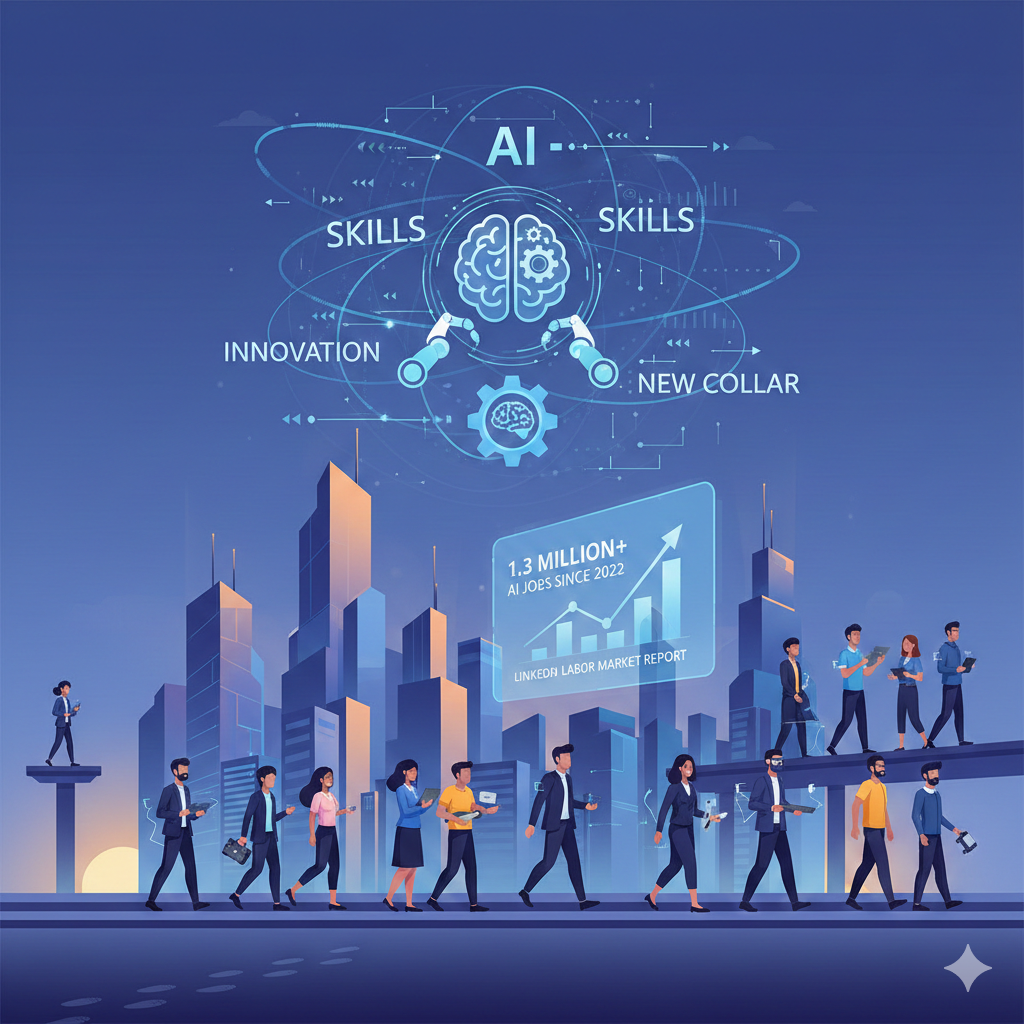
LinkedIn’s latest Labor Market Report: Building a Future of Work That Works reveals that more than 1.3 million AI-enabled jobs have emerged globally since 2022. These fast-growing opportunities are reshaping the workforce and accelerating the rise of new-collar roles jobs that blend tech literacy, hands-on skills, and human strengths like problem-solving and adaptability.
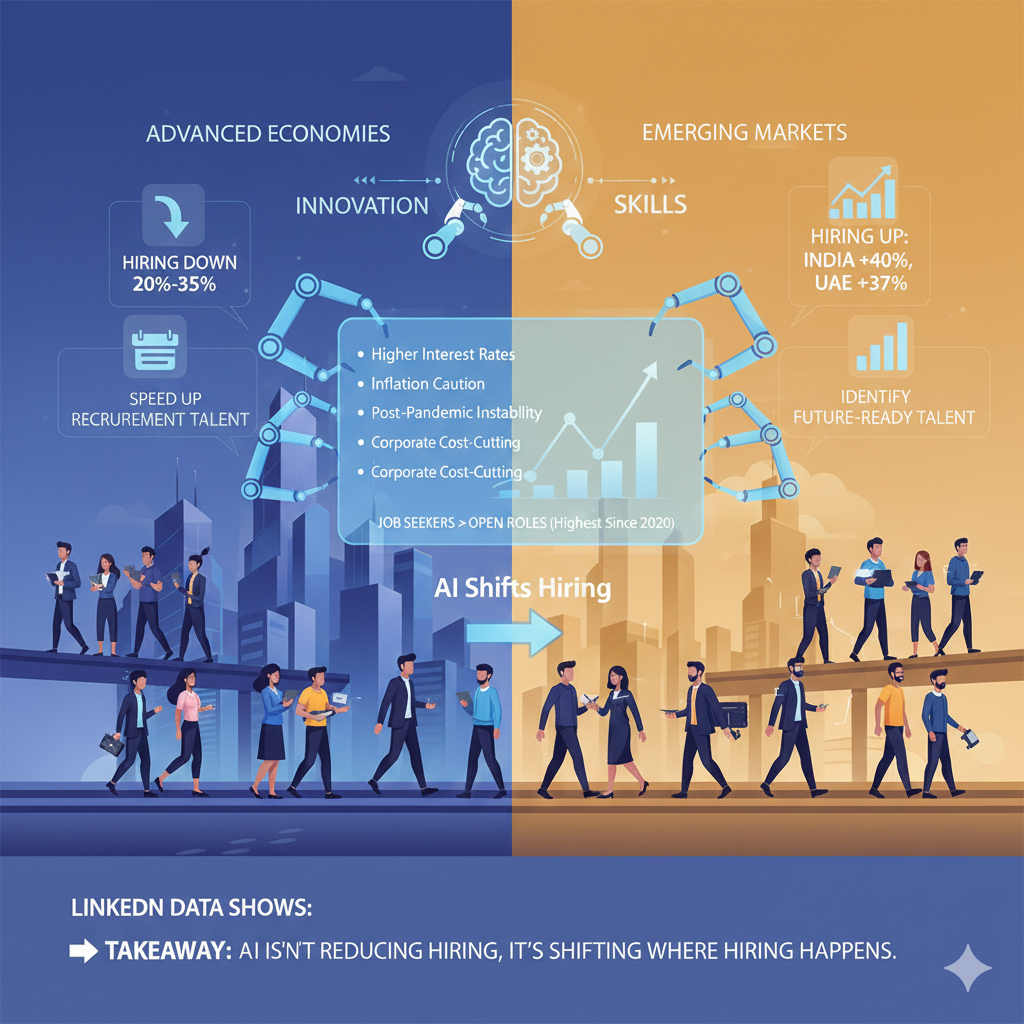
Why hiring slowed down:
-
Higher interest rates
-
Inflation-driven caution
-
Post-pandemic instability
-
Corporate cost-cutting
LinkedIn data shows:
-
Advanced economies: hiring down 20%–35%
-
Emerging markets: hiring up, especially India (+40%) and UAE (+37%)
-
Job seekers currently outnumber open roles at the highest rate since 2020
👉 Takeaway:
AI isn’t reducing hiring, it’s shifting where hiring happens. Leaders now have access to large pools of available talent and should use AI tools to speed up recruitment and identify future-ready candidates.
Key Trend 1: Skills Are Transforming Faster Than Ever
The biggest shake-up isn’t in the number of jobs, it’s in the skills people need.
Skills evolving at high speed:
-
AI literacy jobs up 70% YoY
-
Digital + data skills now baseline for most roles
-
75% of global companies say human skills are more important in the age of AI
Employers now want hybrid abilities:
AI Skills + Human Skills = Competitive Advantage
In-demand human strengths:
-
Adaptability
-
Critical thinking
-
Problem-solving
-
Communication
-
Creativity
👉 Takeaway:
Upskilling is non-negotiable. Companies that invest in training will outperform those that don’t, and workers who adapt will stay employable in a rotating market.
Key Trend 2: New-Collar Jobs Are Redefining Career Paths
Over the last two years, 1.3 million new AI-enabled roles emerged, including:
High-demand emerging roles:
-
AI Engineers
-
Forward-Deployed Engineers
-
Data Annotators
-
AI Forensic Analysts
-
Data Center Technicians
AI Engineer remains the #1 fastest-growing job in the U.S., and global growth in Head of AI roles is in double digits across major economies.
Why this matters:
These roles emphasize:
-
Skills over degrees
-
Tech fluency over traditional experience
-
Rapid learning over credentials
By 2030, 60% of new jobs will not require a university degree.
👉 Takeaway:
The future of work is becoming more accessible. Skills-based hiring creates more pathways for people without formal higher education.
Key Trend 3: Workers Are Turning to Entrepreneurship
With hiring slower and job security uncertain, professionals especially early-career workers are shifting toward self-employment.
Key stats:
-
“Founder” titles grew 60% YoY
-
“Creator” titles grew 90% since 2021
-
4 in 10 Gen Z workers want to work for themselves
This shows a move toward:
-
Freelancing
-
Side businesses
-
Digital entrepreneurship
-
Creator economy careers
👉 Takeaway:
The next generation wants control, flexibility, and meaningful work not traditional corporate paths.
Key Trend 4: Trades Are Becoming More Attractive Than Office Jobs
AI is not only creating new digital roles it’s elevating interest in skilled trades.
Stats from LinkedIn research:
-
62% (U.S.)
-
55% (UK)
-
52% (France)
-
46% (Germany)
…believe trades are more appealing than corporate careers.
Among Gen Z:
-
65% (France)
-
60% (U.S.)
-
57% (Germany)
-
55% (UK)
…say trades feel more meaningful than office jobs.
👉 Takeaway:
AI automation is pushing professionals toward work that feels human, practical, and purpose-driven.
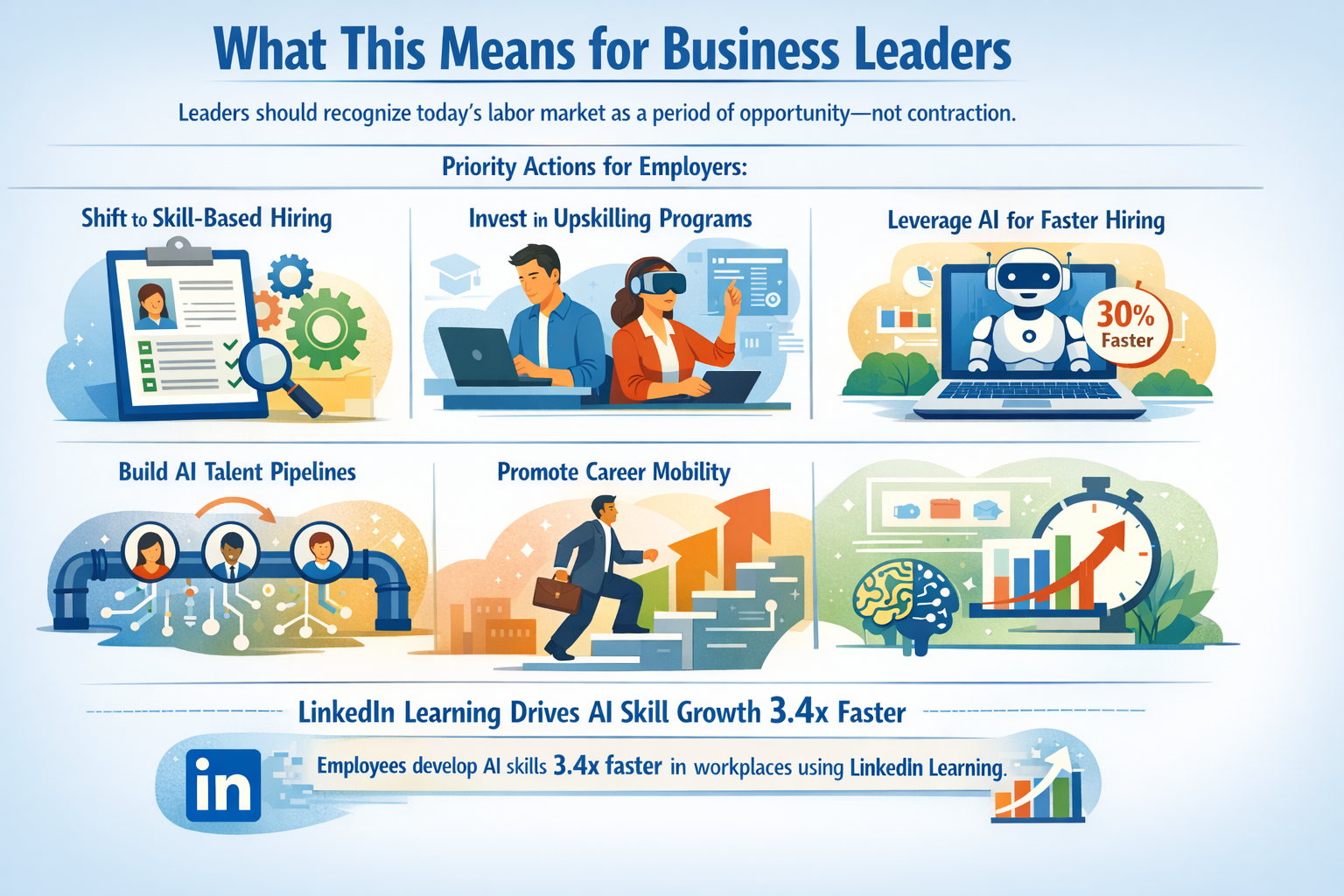
What This Means for Business Leaders
Leaders should recognize today’s labor market as a period of opportunity not contraction.
Priority actions for employers:
-
Shift from degree requirements to skill-based hiring
-
Invest in internal upskilling programs
-
Leverage AI tools to cut hiring time by up to 30%
-
Build pipelines for emerging AI-enabled roles
-
Promote career mobility within the organization
LinkedIn data shows employees develop AI skills 3.4x faster in workplaces using LinkedIn Learning proving the power of structured learning pathways.
What This Means for Job Seekers
Professionals must rethink how they navigate the workforce.
To stay competitive:
-
Build AI literacy skills
-
Strengthen your professional network
-
Learn continuously
-
Explore non-traditional job paths
-
Consider freelance or entrepreneurial options
Job seekers connected to a current employee on LinkedIn are 3.6x more likely to get hired.
Conclusion
The global job market isn’t disappearing it’s evolving.
We’re entering a new-collar era where:
-
Skills outrank degrees
-
AI creates jobs, not just eliminates them
-
Trades and technical roles gain prestige
-
Entrepreneurship becomes mainstream
-
Talent strategy requires adaptability
Businesses and professionals who embrace this shift will be the ones who thrive in 2026 and beyond.
Source: A New World of Work: Global Labor Market Rotates, Not Retreats https://share.google/5XJym7C3IbJJIkvbr
The world of work is entering a new era. While hiring remains 20% below pre-pandemic levels in most advanced economies, the slowdown isn’t a sign of collapse. Instead, the labor market is rotating shifting toward new skills, new opportunities, and new types of careers.
LinkedIn’s latest Labor Market Report: Building a Future of Work That Works reveals that more than 1.3 million AI-enabled jobs have emerged globally since 2022. These fast-growing opportunities are reshaping the workforce and accelerating the rise of new-collar roles jobs that blend tech literacy, hands-on skills, and human strengths like problem-solving and adaptability.
Why hiring slowed down:
-
Higher interest rates
-
Inflation-driven caution
-
Post-pandemic instability
-
Corporate cost-cutting
LinkedIn data shows:
-
Advanced economies: hiring down 20%–35%
-
Emerging markets: hiring up, especially India (+40%) and UAE (+37%)
-
Job seekers currently outnumber open roles at the highest rate since 2020
👉 Takeaway:
AI isn’t reducing hiring, it’s shifting where hiring happens. Leaders now have access to large pools of available talent and should use AI tools to speed up recruitment and identify future-ready candidates.
Key Trend 1: Skills Are Transforming Faster Than Ever
The biggest shake-up isn’t in the number of jobs, it’s in the skills people need.
Skills evolving at high speed:
-
AI literacy jobs up 70% YoY
-
Digital + data skills now baseline for most roles
-
75% of global companies say human skills are more important in the age of AI
Employers now want hybrid abilities:
AI Skills + Human Skills = Competitive Advantage
In-demand human strengths:
-
Adaptability
-
Critical thinking
-
Problem-solving
-
Communication
-
Creativity
👉 Takeaway:
Upskilling is non-negotiable. Companies that invest in training will outperform those that don’t, and workers who adapt will stay employable in a rotating market.
Key Trend 2: New-Collar Jobs Are Redefining Career Paths
Over the last two years, 1.3 million new AI-enabled roles emerged, including:
High-demand emerging roles:
-
AI Engineers
-
Forward-Deployed Engineers
-
Data Annotators
-
AI Forensic Analysts
-
Data Center Technicians
AI Engineer remains the #1 fastest-growing job in the U.S., and global growth in Head of AI roles is in double digits across major economies.
Why this matters:
These roles emphasize:
-
Skills over degrees
-
Tech fluency over traditional experience
-
Rapid learning over credentials
By 2030, 60% of new jobs will not require a university degree.
👉 Takeaway:
The future of work is becoming more accessible. Skills-based hiring creates more pathways for people without formal higher education.
Key Trend 3: Workers Are Turning to Entrepreneurship
With hiring slower and job security uncertain, professionals especially early-career workers are shifting toward self-employment.
Key stats:
-
“Founder” titles grew 60% YoY
-
“Creator” titles grew 90% since 2021
-
4 in 10 Gen Z workers want to work for themselves
This shows a move toward:
-
Freelancing
-
Side businesses
-
Digital entrepreneurship
-
Creator economy careers
👉 Takeaway:
The next generation wants control, flexibility, and meaningful work not traditional corporate paths.
Key Trend 4: Trades Are Becoming More Attractive Than Office Jobs
AI is not only creating new digital roles it’s elevating interest in skilled trades.
Stats from LinkedIn research:
-
62% (U.S.)
-
55% (UK)
-
52% (France)
-
46% (Germany)
…believe trades are more appealing than corporate careers.
Among Gen Z:
-
65% (France)
-
60% (U.S.)
-
57% (Germany)
-
55% (UK)
…say trades feel more meaningful than office jobs.
👉 Takeaway:
AI automation is pushing professionals toward work that feels human, practical, and purpose-driven.
What This Means for Business Leaders
Leaders should recognize today’s labor market as a period of opportunity not contraction.
Priority actions for employers:
-
Shift from degree requirements to skill-based hiring
-
Invest in internal upskilling programs
-
Leverage AI tools to cut hiring time by up to 30%
-
Build pipelines for emerging AI-enabled roles
-
Promote career mobility within the organization
LinkedIn data shows employees develop AI skills 3.4x faster in workplaces using LinkedIn Learning proving the power of structured learning pathways.
What This Means for Job Seekers
Professionals must rethink how they navigate the workforce.
To stay competitive:
-
Build AI literacy skills
-
Strengthen your professional network
-
Learn continuously
-
Explore non-traditional job paths
-
Consider freelance or entrepreneurial options
Job seekers connected to a current employee on LinkedIn are 3.6x more likely to get hired.
Conclusion
The global job market isn’t disappearing it’s evolving.
We’re entering a new-collar era where:
-
Skills outrank degrees
-
AI creates jobs, not just eliminates them
-
Trades and technical roles gain prestige
-
Entrepreneurship becomes mainstream
-
Talent strategy requires adaptability
Businesses and professionals who embrace this shift will be the ones who thrive in 2026 and beyond.
Source: A New World of Work: Global Labor Market Rotates, Not Retreats https://share.google/5XJym7C3IbJJIkvbr