
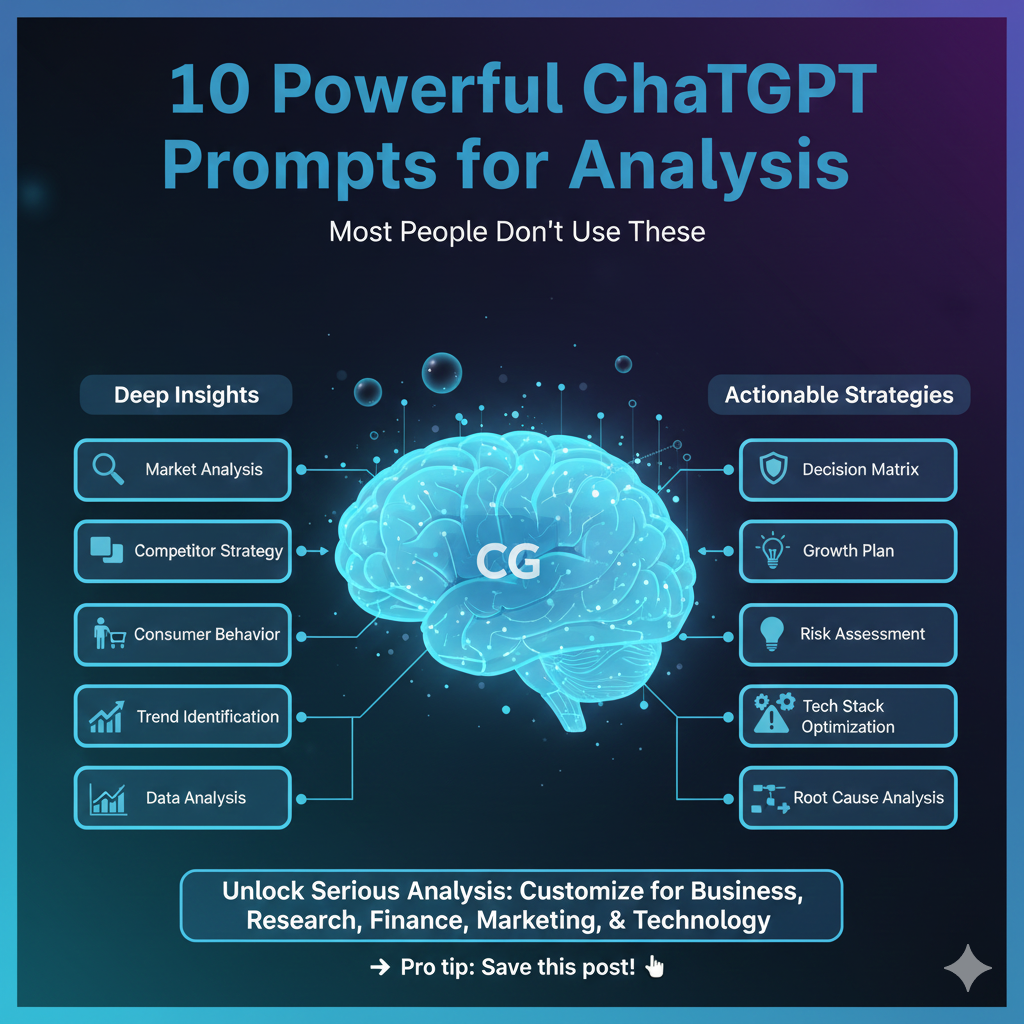
ChatGPT analysis prompts can dramatically improve how you approach data analysis, decision-making, and strategic planning. While many people use ChatGPT for simple questions, few know how to unlock deeper insights using the right prompts. With proper prompting, ChatGPT can generate structured reports, identify trends, and deliver actionable strategies.
In this article, you’ll discover 10 powerful ChatGPT prompt templates for analysis. More importantly, you can easily customize these prompts for business, research, finance, marketing, and technology use cases.
👉 Pro tip: Save this post and revisit it whenever you need serious analysis.
Why ChatGPT Analysis Prompts Are So Powerful
ChatGPT works especially well for analytical tasks because it can:
-
Break down complex problems step by step
-
Identify hidden patterns and trends
-
Organize insights in a clear structure
-
Generate practical recommendations
-
Explain data in simple language
However, the real power depends on how you prompt it.
Below are 10 high-impact prompt templates you can adapt to your own needs
1. Data Analysis for Business Insights
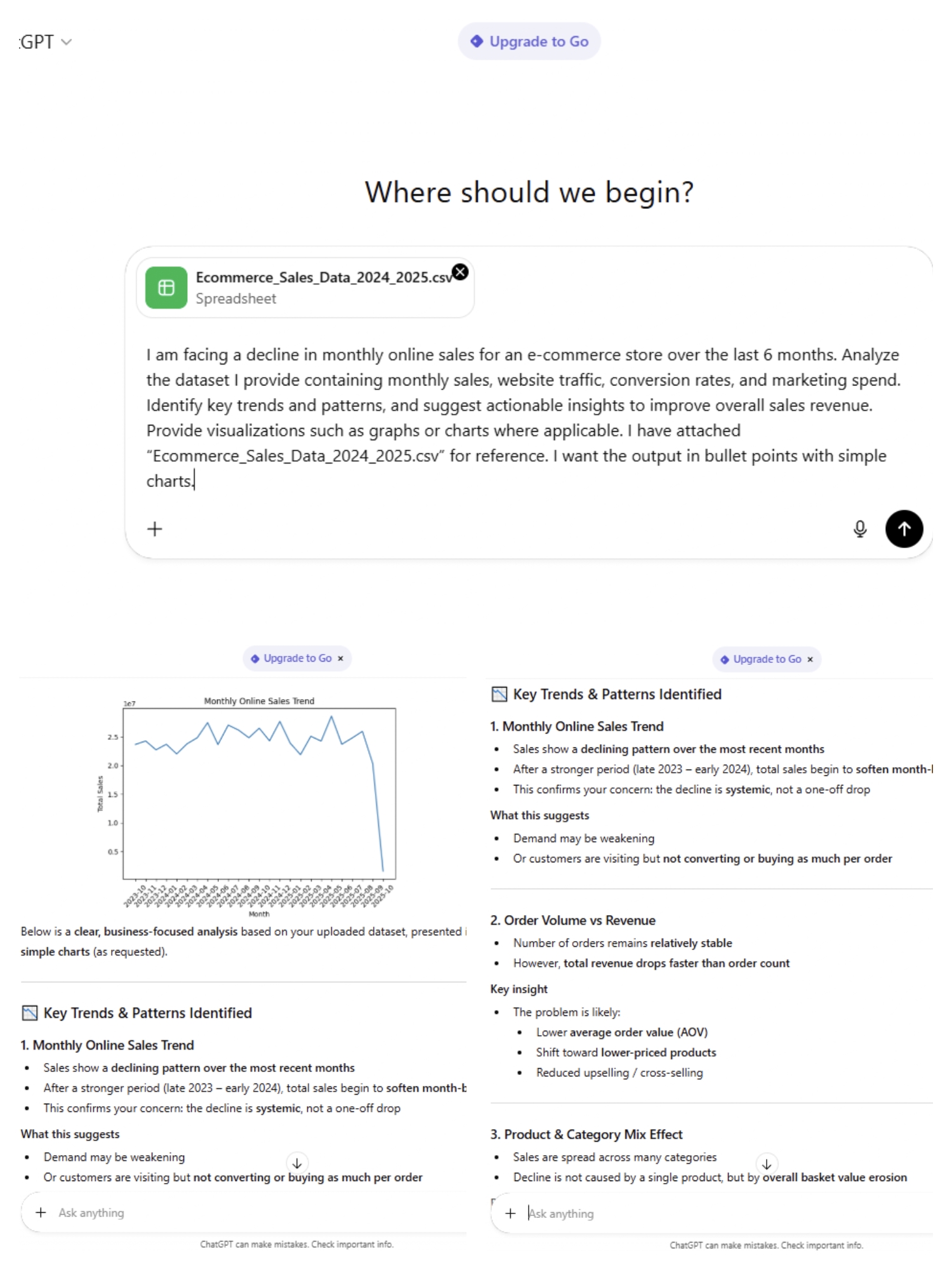
Best for: Sales analysis, customer behavior, performance reviews
Prompt Template:
I am [describe the problem with full context]. Analyze the dataset I provide containing [describe the data]. Identify key trends and patterns, and suggest actionable insights to improve [specific business outcome]. Provide visualizations such as graphs or charts where applicable. I have attached [document name] for reference. I want the output in [format, e.g., summary, table, bullet points, dashboard-style explanation].
2. Market Research Analysis
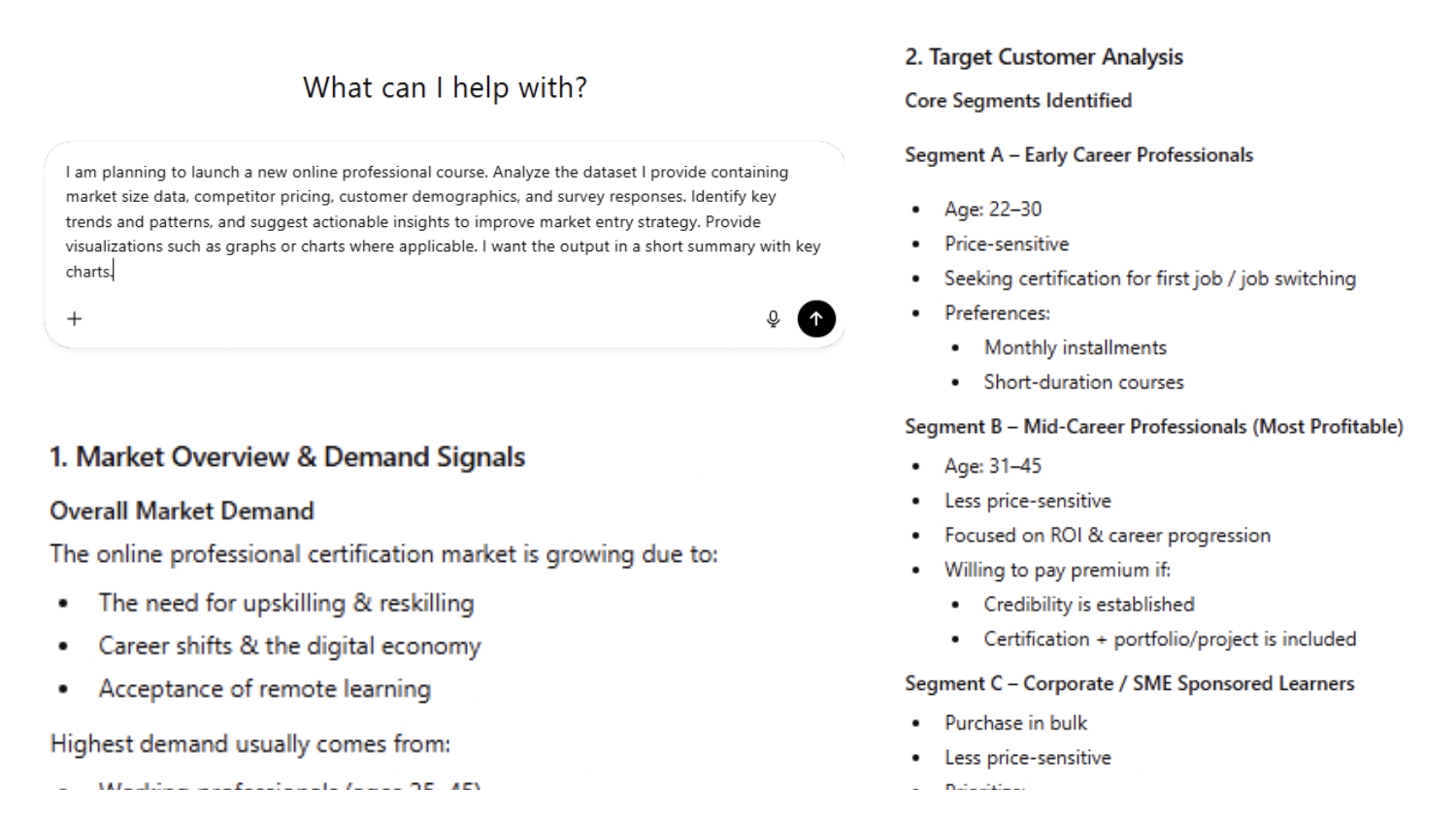
Best for: New product launches, industry research, growth strategy
Prompt Template:
I am [describe the business or market challenge]. Conduct a market analysis for the [industry or product]. Evaluate market trends, competitive landscape, and consumer behavior. Summarize key findings and suggest strategies for market entry or expansion. Include relevant statistics and real-world examples. I have attached [document name] for reference.
3. SWOT Analysis for a Business or Project
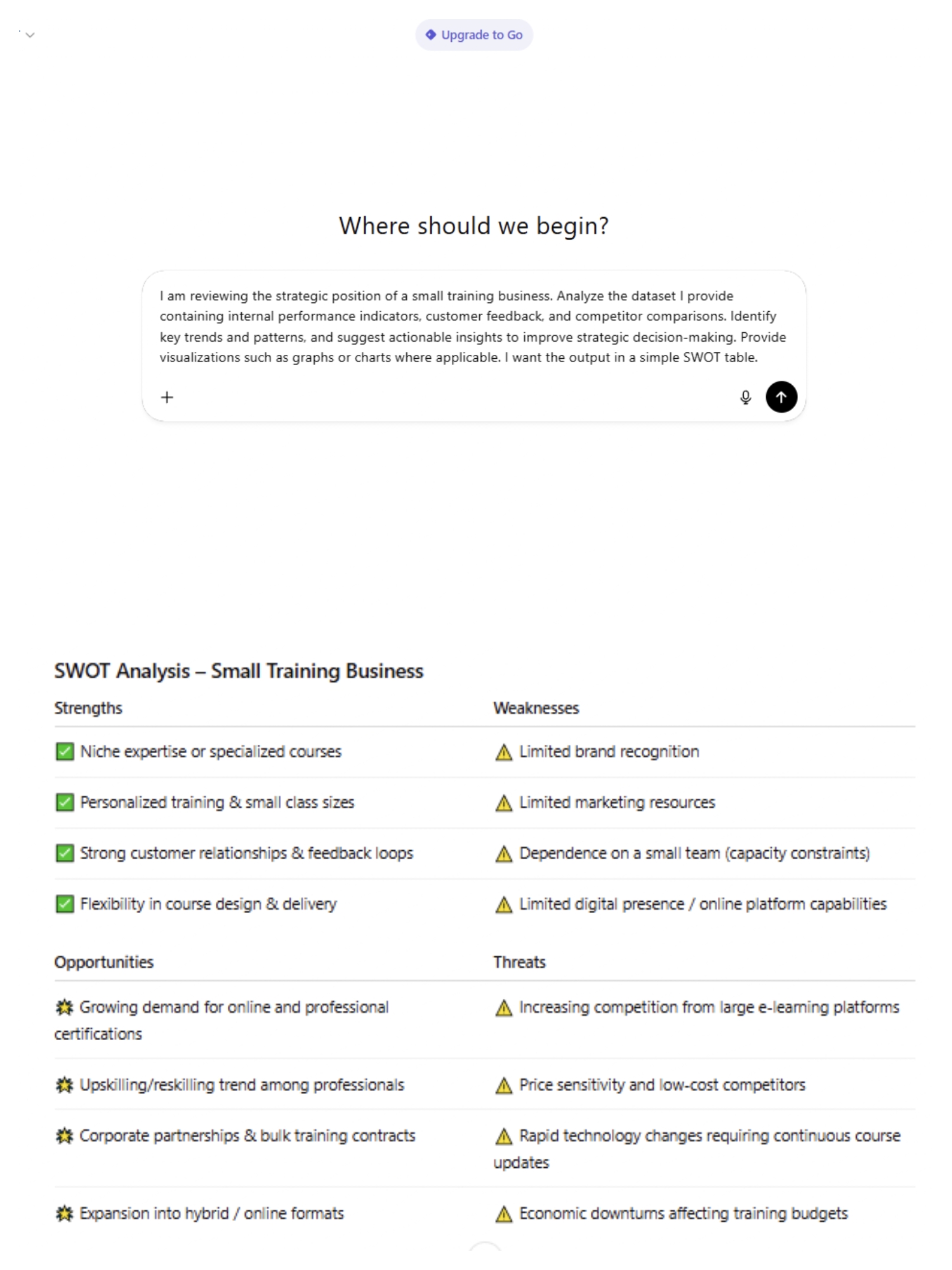
Best for: Strategic planning, pitching, internal reviews
Prompt Template:
I am [describe the situation]. Perform a SWOT analysis for [company or project name]. Identify strengths, weaknesses, opportunities, and threats with detailed explanations and examples. Suggest strategic actions to maximize strengths and opportunities while reducing risks.
4. Sentiment Analysis of Social Media Data
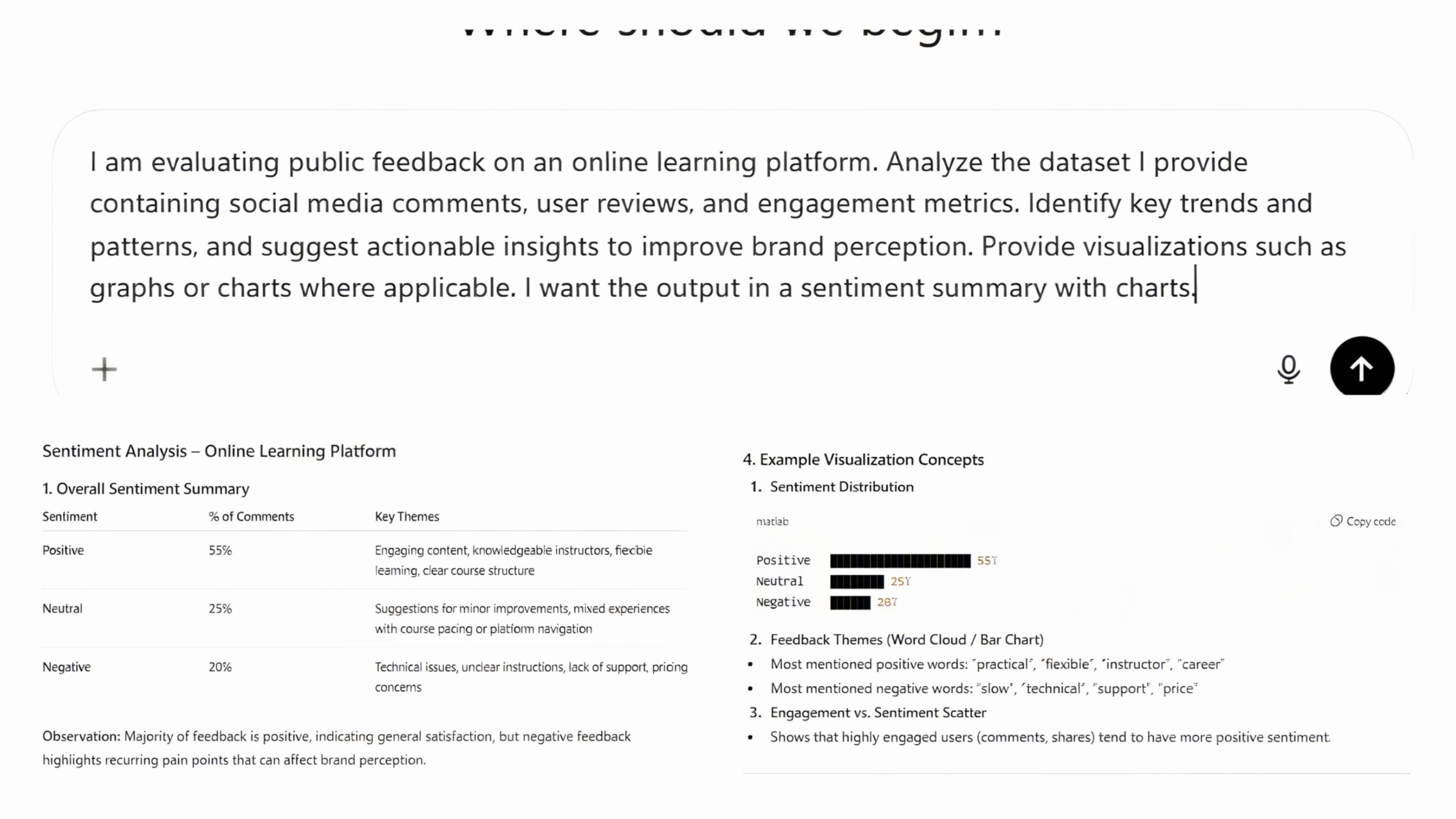
Best for: Brand monitoring, reputation management
Prompt Template:
I am [describe the context]. Analyze the sentiment of [tweets, reviews, posts] related to [brand or topic]. Classify sentiments as positive, negative, or neutral. Identify recurring themes, sentiment spikes, and explain possible causes. I have attached [document name] for reference.
5. Financial Performance Analysis
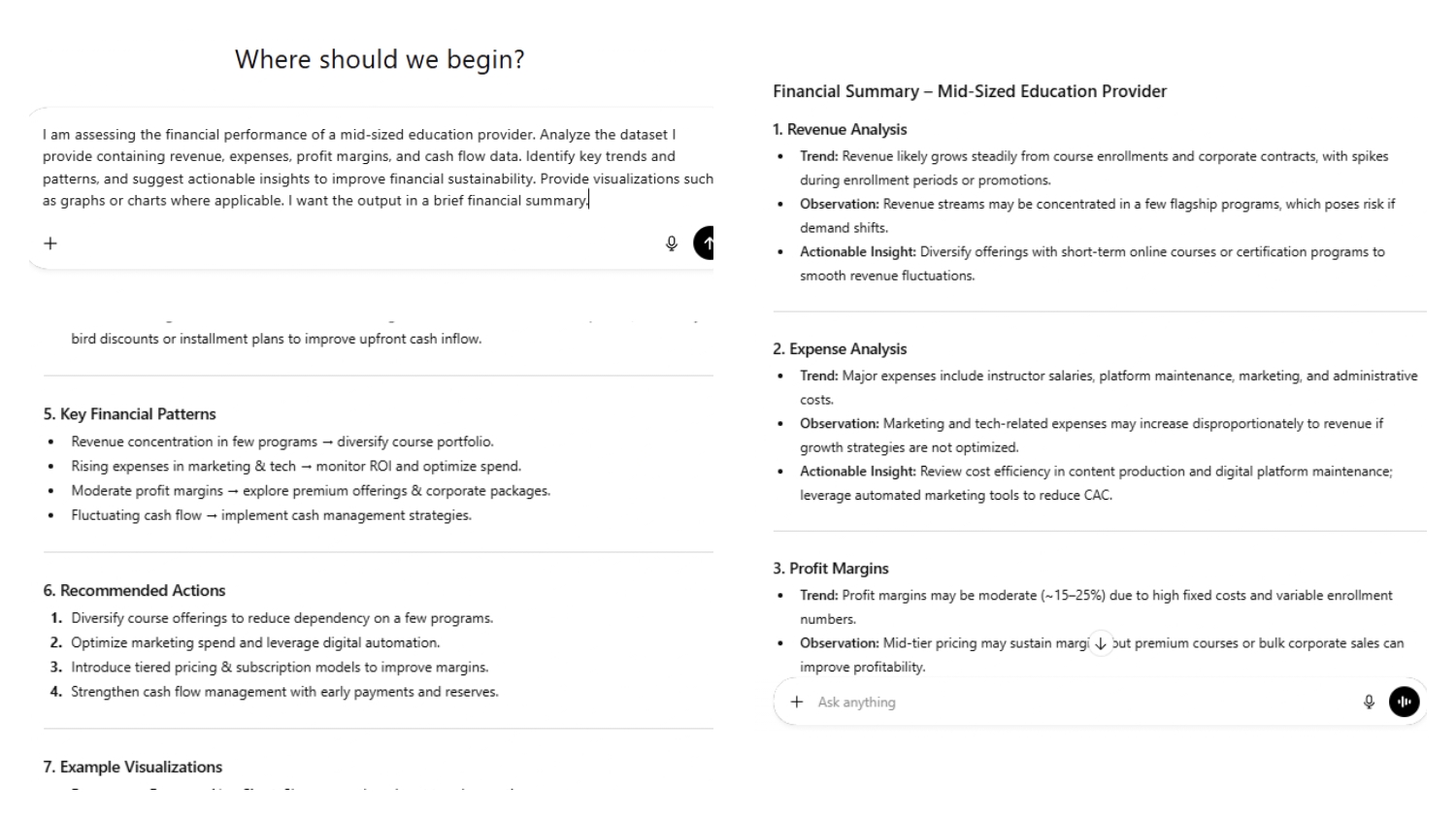
Best for: Financial review, investor reports, benchmarking
Prompt Template:
I am [describe the financial objective]. Analyze the financial statements of [company name] over the past [time period]. Examine revenue trends, profit margins, expenses, and key ratios. Compare performance with industry benchmarks and competitors. Provide insights into financial health and future outlook.
6. Customer Segmentation Analysis
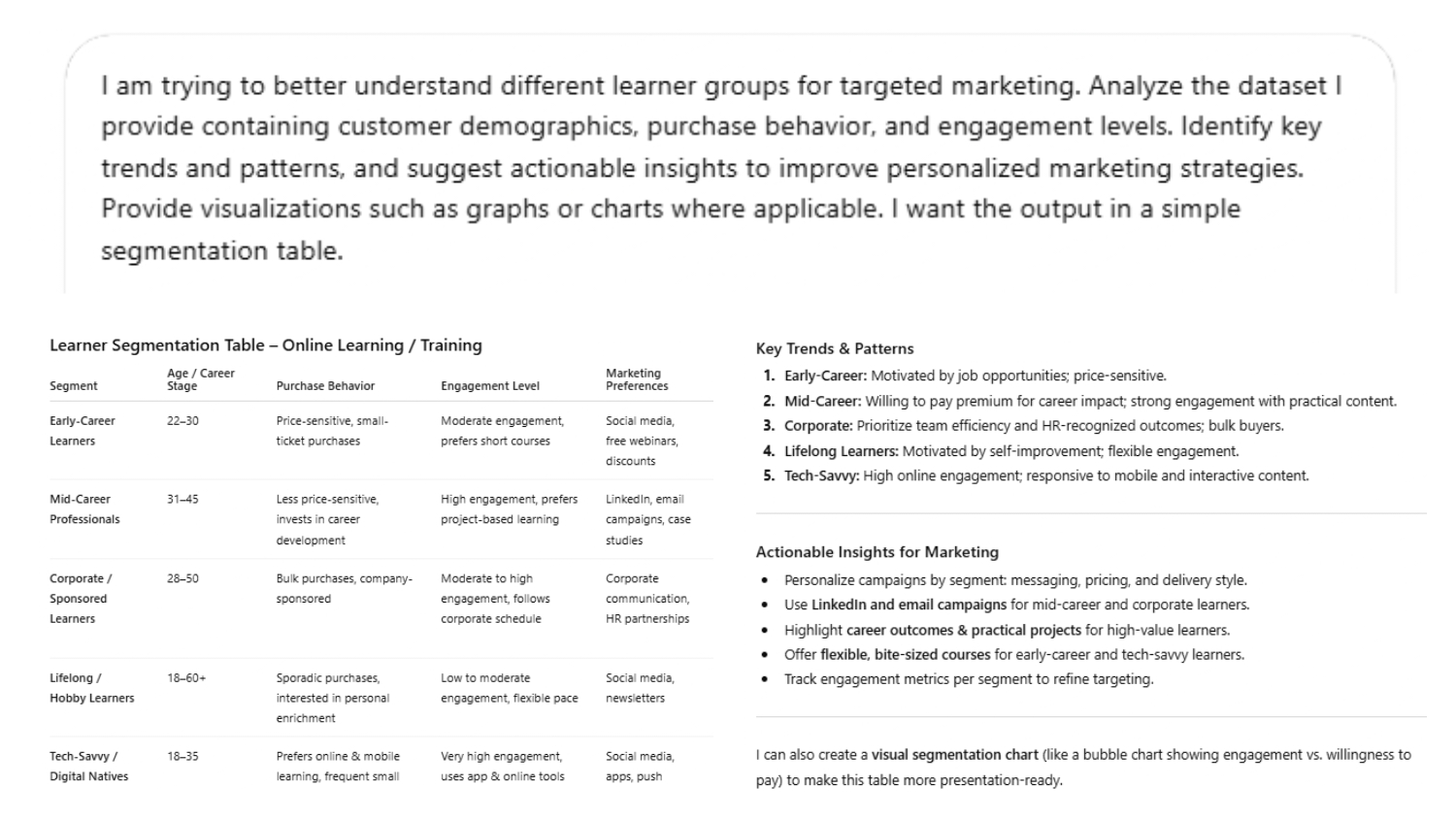
Best for: Marketing strategy, personalization, CRM optimization
Prompt Template:
I am [describe the challenge]. Analyze the customer data to segment customers based on [criteria]. Describe each segment’s characteristics and recommend targeted marketing strategies. Provide visual representations of the segmentation in [format].
7. Risk Analysis for a Project
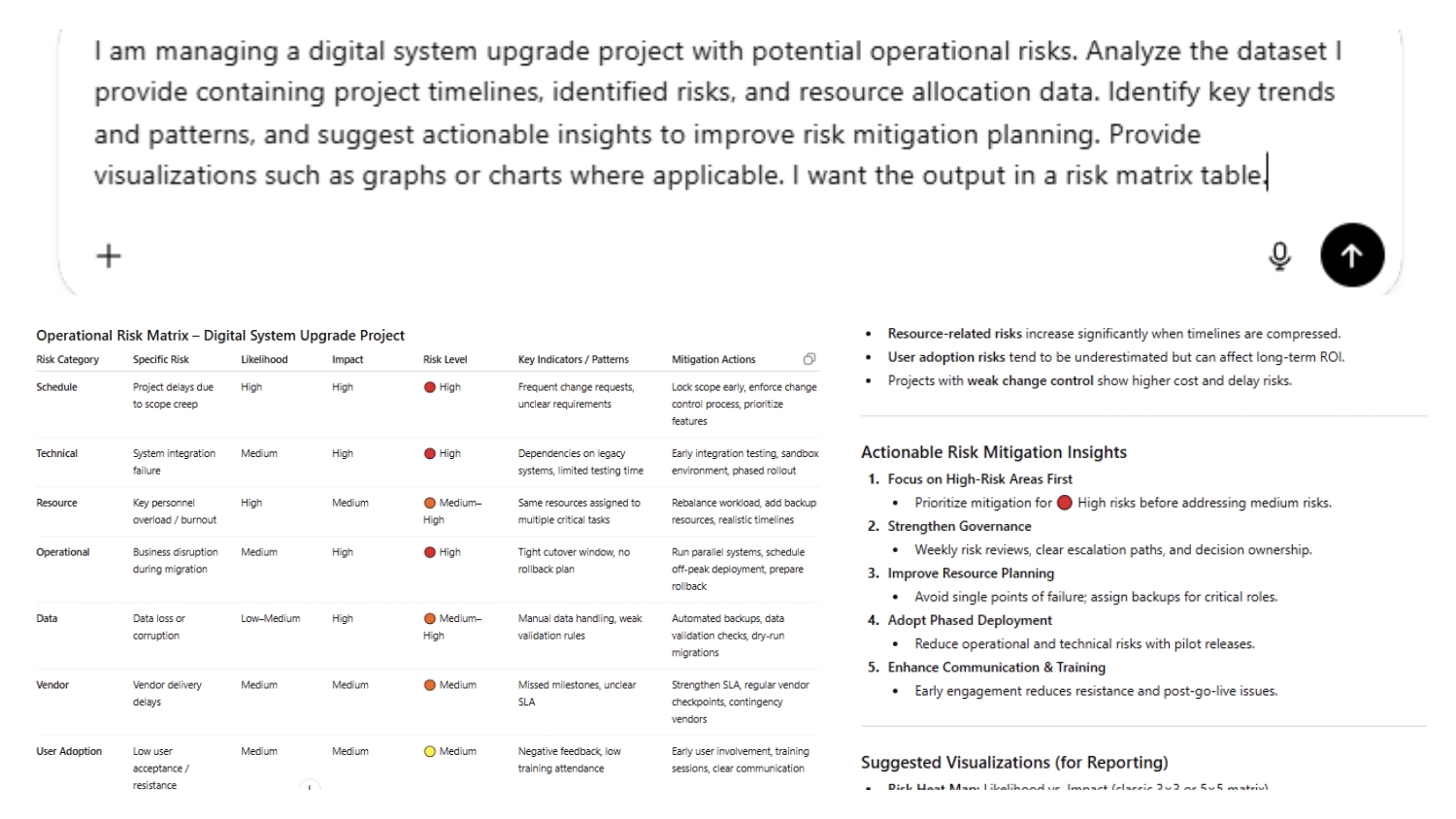
Best for: Project management, planning, audits
Prompt Template:
I am [describe the project]. Conduct a risk analysis by identifying potential risks, their likelihood, and impact. Propose mitigation strategies and categorize risks as high, medium, or low. Create a risk matrix for visualization.
8. Competitor Analysis
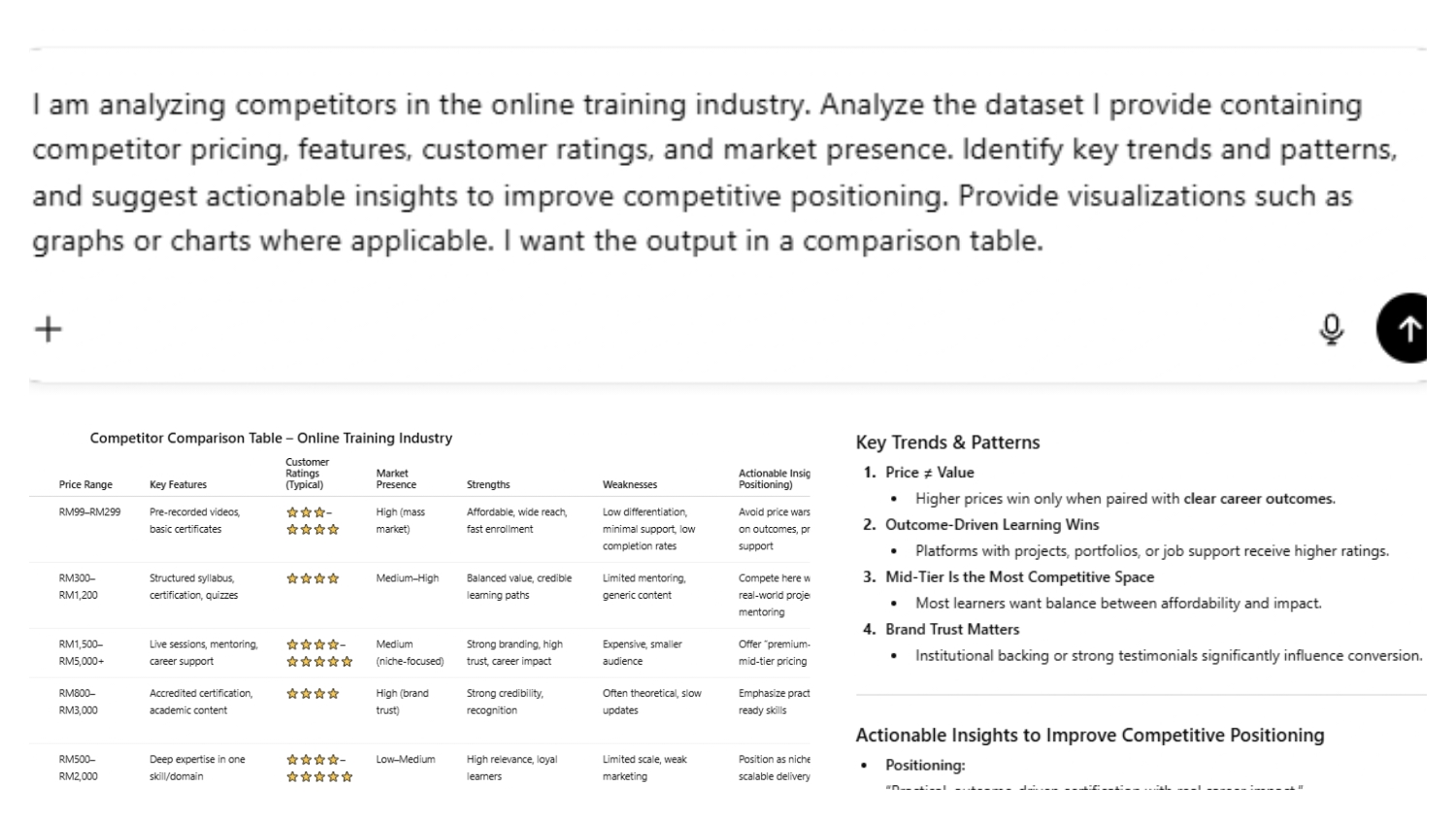
Best for: Competitive strategy, positioning
Prompt Template:
I am [describe the competitive challenge]. Perform a competitor analysis for [company or product]. Analyze competitors’ strengths, weaknesses, pricing, features, and market positioning. Compare them with our offering and recommend ways to gain competitive advantage.
9. Trend Analysis in Technology
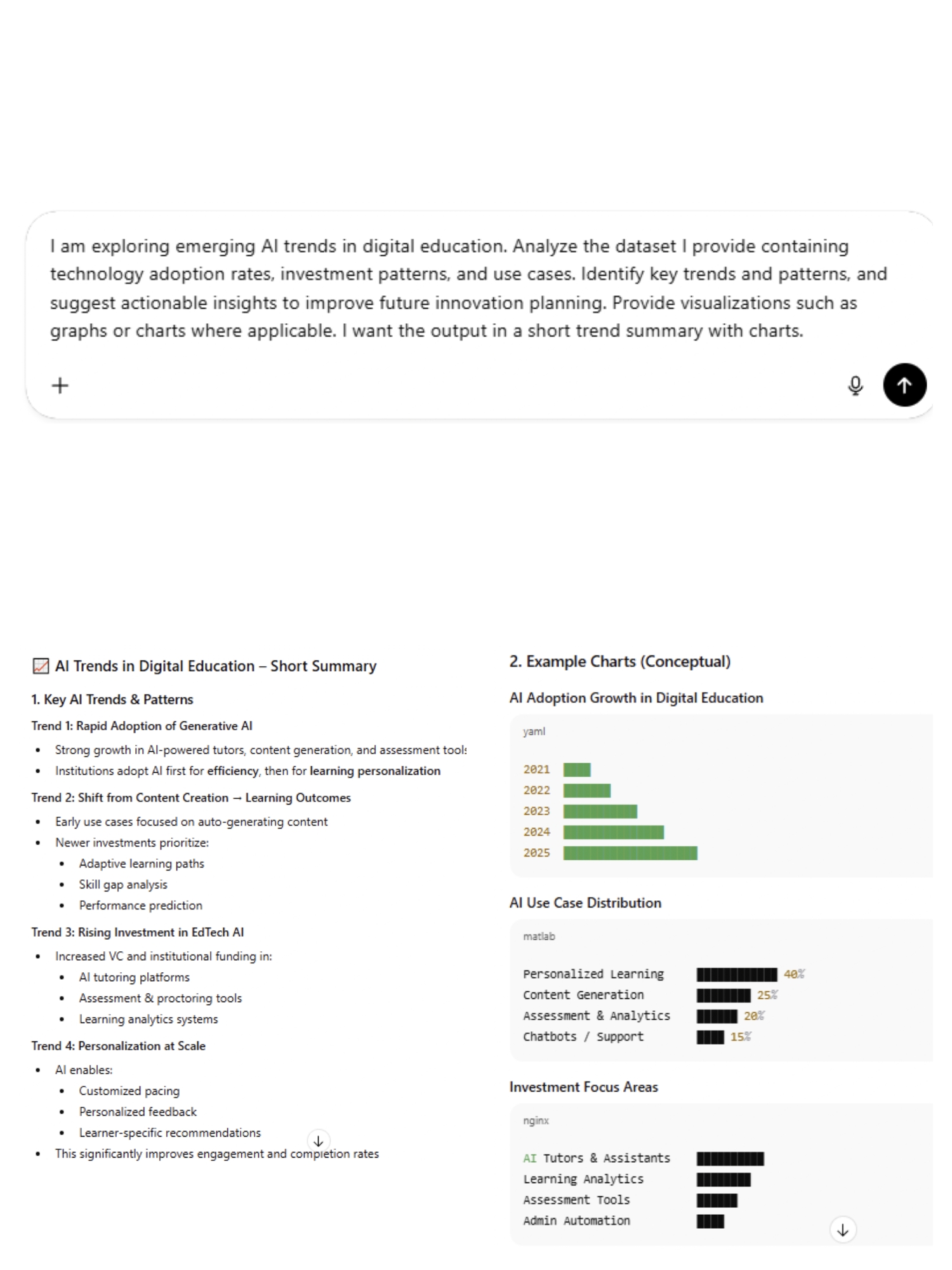
Best for: Innovation planning, future forecasting
Prompt Template:
I am [describe the objective]. Analyze the latest trends in [technology or sector]. Discuss key developments, leading companies, and future directions. Explain how these trends could impact [industry or society], supported by examples and projections.
10. Root Cause Analysis for Quality Issues
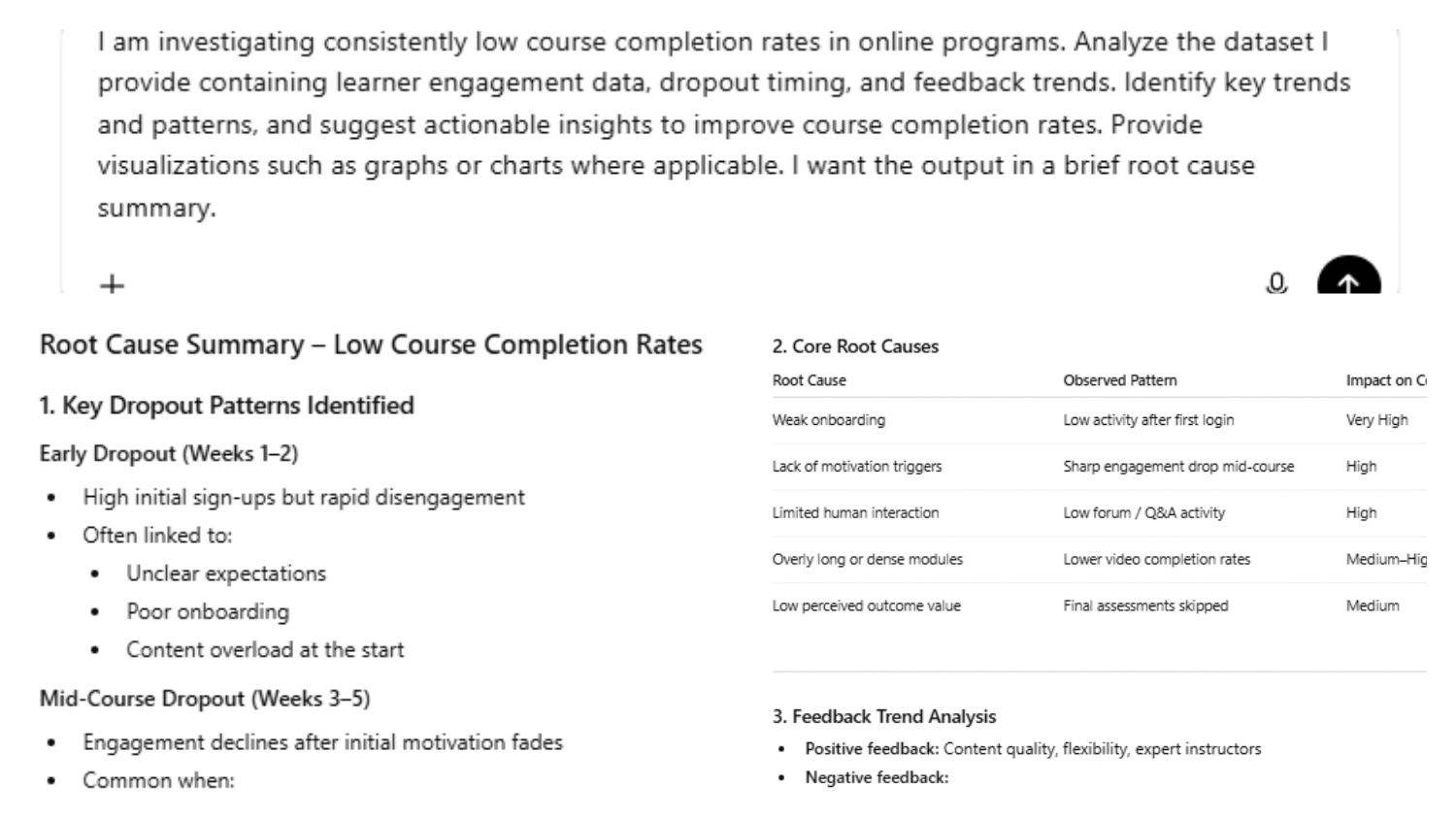
Best for: Operations, quality control, process improvement
Prompt Template:
I am [describe the quality issue]. Conduct a root cause analysis for problems in [product or service]. Use methods like the 5 Whys to identify underlying causes. Recommend corrective and preventive actions to avoid recurrence.
How to Use ChatGPT Analysis Prompts Effectively
Tip 1: These Are Templates
First, remember that these prompts are starting points.
You must personalize them with:
-
Clear context
-
Specific goals
-
Preferred output format
Tip 2: Add Role Prompting (Optional)
In some cases, role prompting improves results. For example:
-
“Act as a senior business analyst…”
-
“Act as a financial consultant…”
-
“Act as a market research expert…”
Tip 3: Convert PDFs to Text First
Before analysis, convert PDFs to text. Tools like Mistral work well. After that, paste the text into ChatGPT for deeper insights.
Final Thoughts
These ChatGPT analysis prompts are flexible and can be adapted to many real-world scenarios.
By mastering ChatGPT analysis prompts, you can save time, reduce manual work, and make better data-driven decisions across industries. ChatGPT is not just a chatbot. When used correctly, it becomes a powerful analysis assistant.